Dr. Joe Park
Being told you have a herniated disc sounds worse than it usually is. The word conjures something torn beyond repair, and many people assume surgery is the only route. In practice, most disc herniations improve without it, and conservative care plays a substantial role.
This article covers what a herniated disc is, what chiropractic care can and cannot do, and the situations where referral matters more than treatment.
What a Herniated Disc Is
Spinal discs sit between the vertebrae and act as shock absorbers. Each has a tough outer ring and a softer gel-like centre.
A herniated disc occurs when a spinal disc pushes its inner material through a weakness in the outer ring. If that material contacts a nearby nerve root, you get the leg pain or arm pain that brings most people in.
The terminology is inconsistent and confusing. A slipped or ruptured disc, a bulging disc and a herniated disc are often used interchangeably in conversation, though they describe different degrees of the same process. Discs do not actually slip out of place.
Herniated Disc Symptoms
Location determines the pattern. A lumbar disc injury typically produces low back pain with symptoms travelling into the buttock, leg or foot. A cervical one produces neck pain with symptoms into the shoulder, arm or hand.
Common features include pain that worsens with sitting, bending or coughing; numbness or tingling following a defined path; muscle weakness in a specific movement; and relief in certain positions.
Worth knowing: a meaningful proportion of people with disc herniations visible on imaging have no symptoms at all. Findings on a scan do not automatically explain a person's pain, which is why examination matters alongside imaging.
How Chiropractors Treat Herniated Discs
Treatment is aimed at reducing pressure on the irritated nerve, restoring movement to the surrounding area, and addressing why the disc was loaded that way.
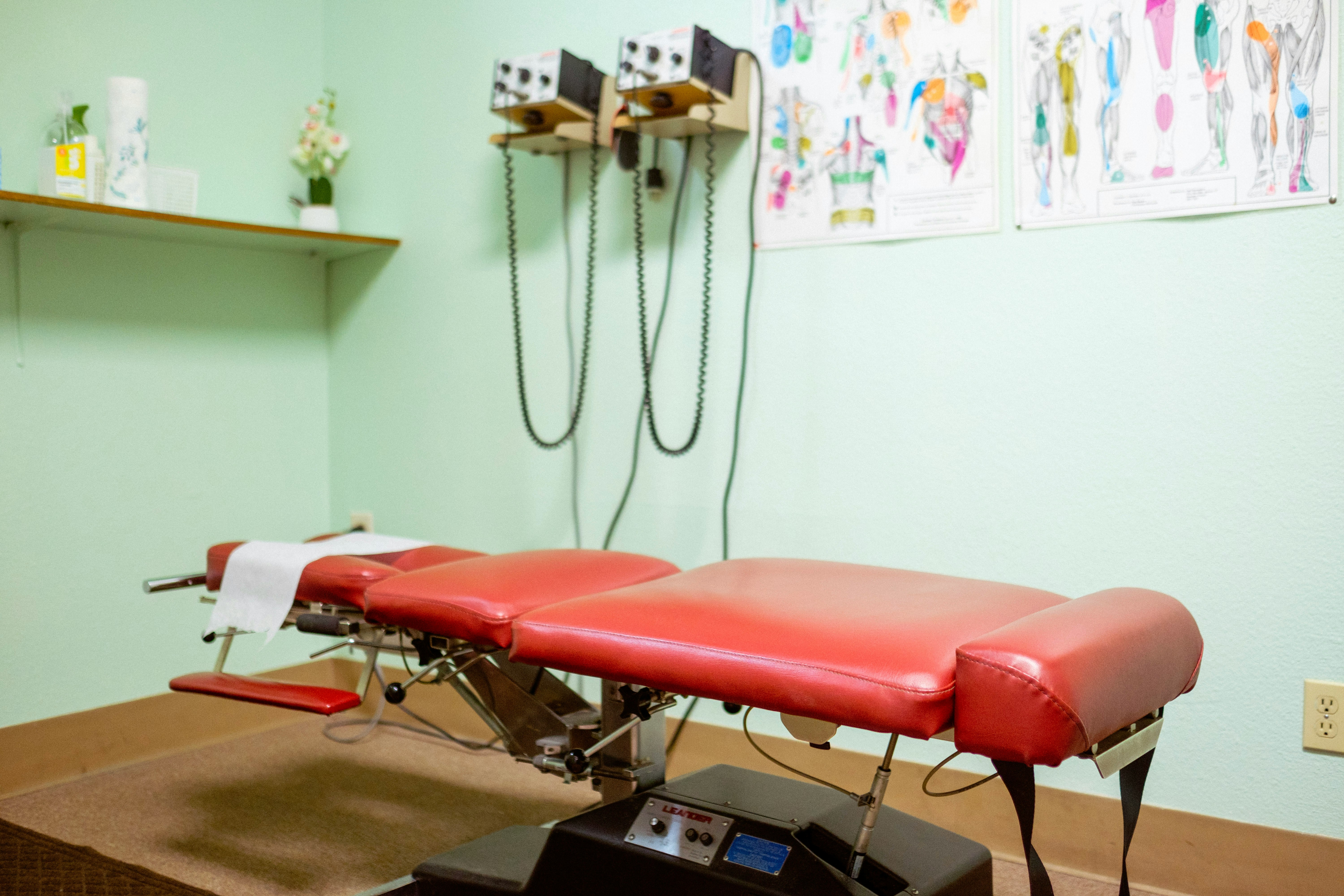
Flexion-distraction is one of the more commonly used approaches for disc herniation. It uses a specialised table to apply gentle, rhythmic traction. It is a non-thrust technique, which suits an irritable disc.
Pelvic blocking uses padded wedges positioned under the pelvis, allowing gravity and body position to change the mechanics around the affected segment. Also low-force.
Spinal manipulation may be applied to restricted segments above or below the involved level rather than directly onto the herniation, depending on presentation.
Soft tissue work addresses the protective muscle guarding that develops around an injury and often outlasts it.
Rehabilitation exercise is the part that determines whether you are back in a year. Disc injuries respond to graded loading and to changing the movement patterns that contributed.
Technique selection is not one-size-fits-all. An acutely inflamed disc with intense pain calls for gentler handling than a longstanding, settled one.
What the Evidence Supports
Conservative care, including manual therapy and exercise, is widely recommended as a first-line approach for disc-related pain without serious neurological signs. Many people improve over weeks to months, and the natural history of disc herniation is often favourable, with the herniated material frequently reducing over time.
Being honest about limits matters here. Chiropractic treatment does not push a disc back into place, and any practitioner describing it that way is overstating what manual care does. What treatment can influence is joint movement, muscle guarding, load distribution and pain, and that combination is often enough for meaningful recovery.
Results vary between individuals, and some people need other interventions.
When to Refer Rather than Treat
Certain findings require medical assessment, and in one case emergency care:
Loss of bladder or bowel control, or numbness in the saddle region. This may indicate cauda equina syndrome and is a medical emergency requiring immediate attention.
Progressive muscle weakness, such as a foot that catches or drags.
Symptoms in both legs simultaneously.
Severe unremitting pain not responding to conservative care over a reasonable trial.
Fever, unexplained weight loss, or a history of cancer with new spinal symptoms.
Significant trauma preceding the onset.
A responsible chiropractor screens for these at the first visit and refers where appropriate. Good care includes knowing what not to treat.
What You Can Do Between Visits
Keep moving within tolerance; extended bed rest tends to slow recovery. Avoid prolonged sitting, which loads lumbar discs more than standing. Bend at the hips and knees rather than rounding the low back, particularly first thing in the morning when discs are most hydrated. Notice which positions ease symptoms and use them.
Pay attention to whether symptoms are moving toward the spine and away from the limb. That direction of change is generally a good sign, even if overall pain has not dropped much yet.
Frequently Asked Questions
Is Chiropractic Safe with a Herniated Disc?
For most people without red flag signs, low-force techniques appropriate to disc injury are considered reasonably safe. Screening beforehand is what makes it appropriate, which is why the history and examination matter.
Will I Need Surgery?
Most people with disc herniation do not. Surgery is generally considered where there is progressive neurological deficit, cauda equina syndrome, or persistent disabling symptoms after conservative care has been given a fair trial.
How Long Does Recovery Take?
Many people improve substantially over six to twelve weeks, though some take longer. Recent injuries generally recover faster than longstanding ones.
Do I Need an MRI First?
Not usually. Imaging is indicated with red flags, when progress stalls, or when surgical opinion is being sought. Findings must be interpreted alongside examination, since scans often show changes that are not causing symptoms.
Can the Disc Heal?
Disc herniations frequently reduce over time, and symptoms often improve even where imaging changes little.
Getting Assessed
Because disc symptoms overlap with several other conditions, an accurate assessment is what determines whether treatment will help. At Heem Health in Tustin, Dr. Joe Park combines movement-based examination with digital motion X-ray, which shows how the spine behaves during movement rather than at rest.
You can read about our chiropractic care and supportive therapies, or contact the clinic to book.
This article is provided for general educational purposes and is not medical advice. It does not replace assessment by a qualified healthcare provider, and individual results vary. Loss of bladder or bowel control, saddle numbness or progressive weakness require immediate medical attention.

Medically reviewed by