Supportive Therapies

Supportive Therapies

Supportive Therapies

Supportive therapies at Heem Health are designed to complement chiropractic care and support recovery between visits. These services focus on soft tissue health, neuromuscular regulation, and mobility, and are integrated into care plans when clinically appropriate. They are not standalone treatments, but part of a coordinated approach.

Acupuncture

Acupuncture

Acupuncture is used to support neuromuscular regulation and pain modulation. It may help reduce muscle tension, improve comfort, and support nervous system balance as part of an integrated care plan alongside chiropractic care and diagnostic findings.

Benefits include:

  • Supports pain modulation and neuromuscular function

  • Helps reduce muscle tightness and discomfort

  • Promotes nervous system balance and relaxation

  • Complements chiropractic care and diagnostic findings

  • Enhances overall treatment effectiveness within an integrated care plan.


Acupuncture is used to support neuromuscular regulation and pain modulation. It may help reduce muscle tension, improve comfort, and support nervous system balance as part of an integrated care plan alongside chiropractic care and diagnostic findings.

Benefits include:

  • Supports pain modulation and neuromuscular function

  • Helps reduce muscle tightness and discomfort

  • Promotes nervous system balance and relaxation

  • Complements chiropractic care and diagnostic findings

  • Enhances overall treatment effectiveness within an integrated care plan.


Stretch Therapy

Stretch Therapy

Stretch therapy is designed to improve joint range of motion, flexibility, and movement quality. Guided stretching may help address stiffness, postural stress, and compensatory patterns that limit progress between visits.

Benefits include:

  • Improves joint mobility and flexibility

  • Reduces stiffness and postural strain

  • Addresses compensatory movement patterns

  • Supports better movement quality between visits

  • Enhances long-term outcomes of chiropractic care


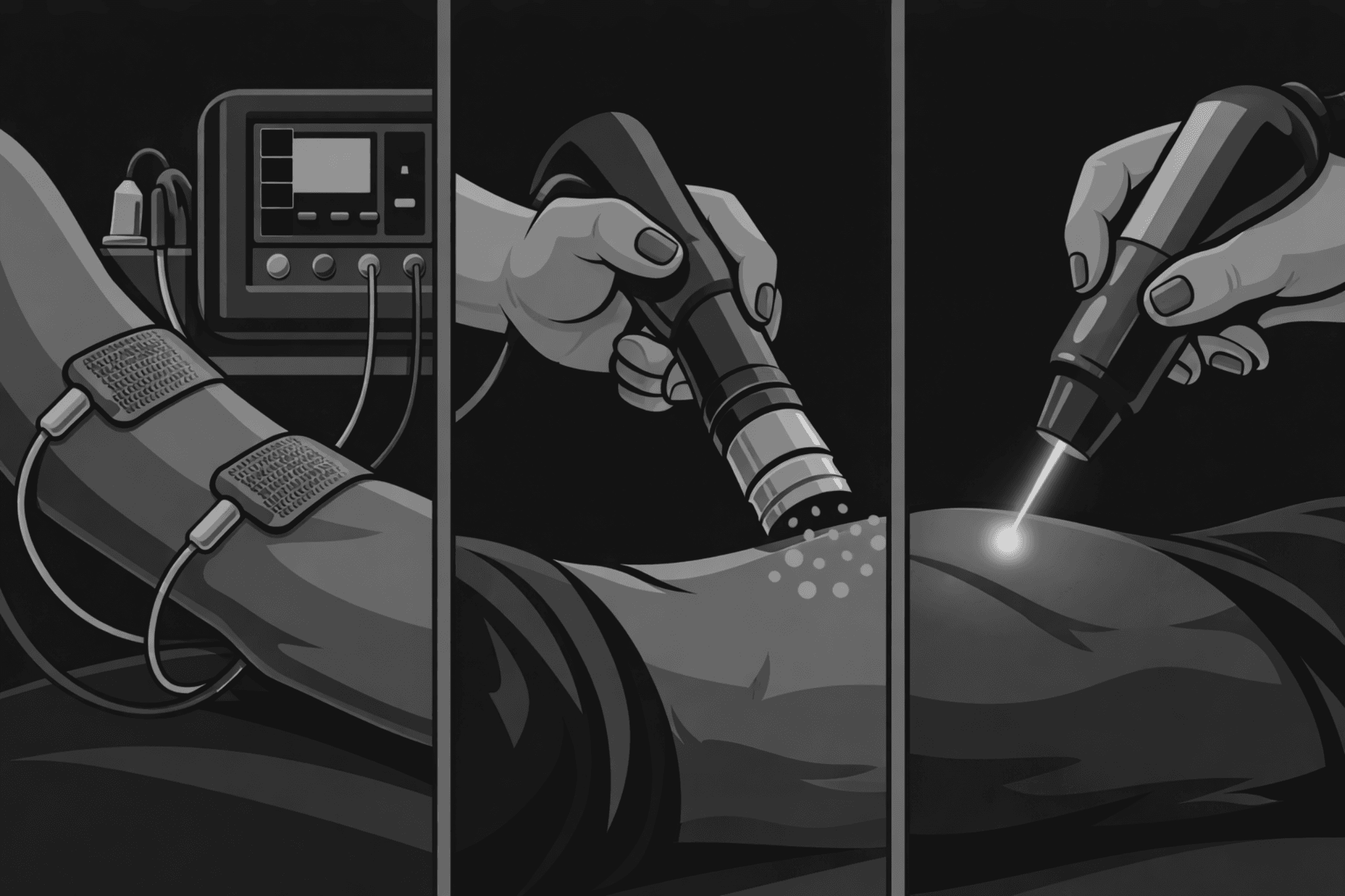
Therapeutic Modalities (e-stim, shockwave, laser)

Therapeutic Modalities (e-stim, shockwave, laser)

Adjunctive modalities may be used to support tissue healing, manage discomfort, and enhance recovery. These technologies are selected based on clinical assessment and individual response, and are used to reinforce—not replace—primary care.

Benefits include:

  • Supports tissue healing and cellular recovery

  • Helps manage pain and inflammation

  • Enhances circulation and neuromuscular response

  • Accelerates recovery between treatments

  • Reinforces chiropractic care without replacing it


Adjunctive modalities may be used to support tissue healing, manage discomfort, and enhance recovery. These technologies are selected based on clinical assessment and individual response, and are used to reinforce not replace primary care.

Benefits include:

  • Supports tissue healing and cellular recovery

  • Helps manage pain and inflammation

  • Enhances circulation and neuromuscular response

  • Accelerates recovery between treatments

  • Reinforces chiropractic care without replacing it


Integrated, Patient-Specific Application

Integrated, Patient-Specific Application

Supportive therapies are applied intentionally and selectively. Recommendations are based on assessment, goals, and progress, ensuring that each therapy serves a defined role within the overall care strategy

.Benefits include:

  • Personalized therapy selection based on patient needs

  • Ensures each modality serves a clear clinical purpose

  • Adapts care based on progress and response

  • Supports coordinated, goal-driven treatment

  • Enhances overall effectiveness of the care strategy


Supportive therapies are applied intentionally and selectively. Recommendations are based on assessment, goals, and progress, ensuring that each therapy serves a defined role within the overall care strategy

Benefits include:

  • Personalized therapy selection based on patient needs

  • Ensures each modality serves a clear clinical purpose

  • Adapts care based on progress and response

  • Supports coordinated, goal-driven treatment

  • Enhances overall effectiveness of the care strategy