Dr. Joe Park
Anterior pelvic tilt is one of the most talked-about posture findings online and one of the most overstated. It is a real, measurable pelvic position, and it is also present in plenty of people with no symptoms at all.
Worth knowing, then: what it actually is, how to check for it, when it matters, and what genuinely changes it.
What Anterior Pelvic Tilt Is
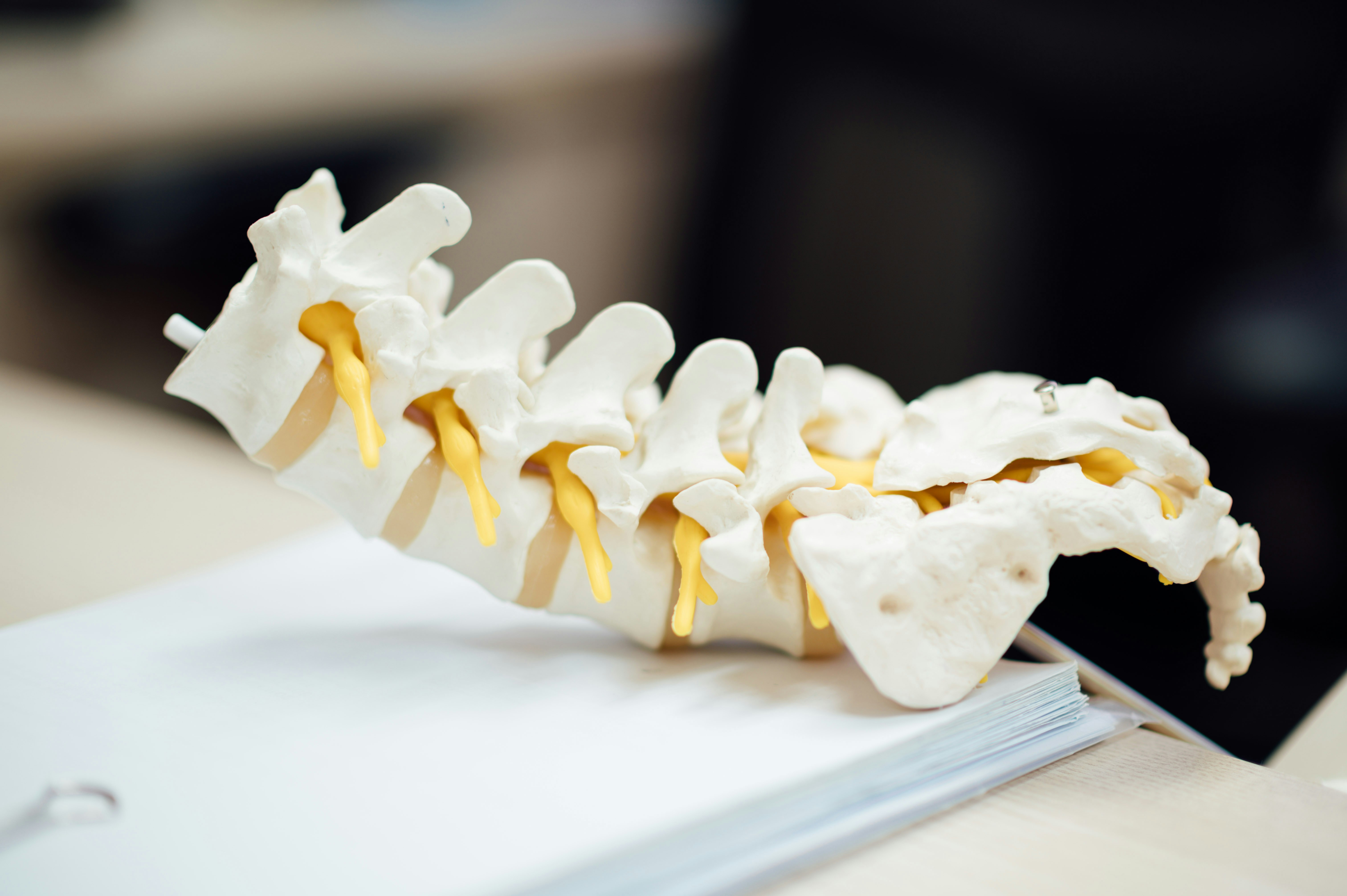
The pelvis rotates forward and backward around the hip joints. Anterior pelvic tilt occurs when the front of the pelvis drops and the back rises, tipping the pelvis forward. This increases lumbar lordosis, the natural inward curve of the lower back, producing the appearance of an arched back and a protruding abdomen.
Posterior pelvic tilt is the opposite: the pelvis tucks under and the lumbar curve flattens.
Some degree of anterior tilt is normal. Research has found a fairly wide range of pelvic position in people without symptoms, and it differs on average between men and women. The finding on its own is not a diagnosis.
Anterior vs. Posterior Pelvic Tilt
The two terms describe opposite directions of the same movement. In anterior tilt the front of the pelvis drops and the lumbar curve deepens. In posterior tilt the pelvis tucks under, the lower back flattens and the tailbone drops. Neither is a diagnosis on its own.
Both are common in people without pain. In a study of 120 young, healthy adults with no symptoms, 85% of men and 75% of women measured with an anterior tilt, 6% of men and 7% of women with a posterior tilt, and the rest sat in neutral (Herrington, Manual Therapy, 2011). That is why an assessment weighs your symptoms and how you move, not the pelvic angle alone.
How to Test for Anterior Pelvic Tilt at Home
The wall test. Stand with your back against a wall, heels a few inches out, and slide a hand into the gap behind your lower back. A hand-width gap is typical. Substantially more than that suggests increased lordosis.
The landmark check. Find the bony point at the front of your hip, then the corresponding bump at the back of the pelvis. In a neutral pelvic position these sit at roughly similar heights. If the front point is noticeably lower, that indicates anterior tilt.
The photo. Have someone photograph you from the side standing relaxed, not posing. People correct themselves the moment they think about posture, which is why the relaxed version is the informative one.
These give an indication rather than a measurement. A physical therapist or chiropractor can assess it properly alongside how you actually move.
What Causes It
Tight hip flexors. The muscles at the front of the hip attach to the lumbar spine and pelvis. When shortened, typically from prolonged sitting, they pull the pelvis forward.
Weak abdominal muscles. The deep abdominals help hold the pelvis in position from the front. When they are not contributing, that control is lost.
Weak glutes. The gluteals pull the back of the pelvis down, counteracting the hip flexors. Weakness here removes the counterbalance.
Prolonged sitting. This is the common thread. Sitting holds the hip flexors short and the glutes inactive for hours at a time.
Pregnancy and weight distribution. Additional load at the front shifts the pelvis forward, and the change usually resolves afterward.
Structural variation. Some people's bony anatomy simply sits in more anterior tilt, and no amount of exercise will change that. This is a genuine limit worth knowing about before chasing a number.
When It Matters
Here the honest answer differs from most of what is written about it. Research has not established anterior pelvic tilt as a reliable cause of low back pain. Studies comparing people with and without back pain have generally not found the clear difference you would expect if it were a direct cause.
It is worth addressing when it comes with symptoms such as low back pain that worsens with standing, hip pinching at the front, hamstring tightness that never resolves, or difficulty engaging the glutes during exercise. Where those are present, the pelvic position is part of the picture rather than the whole explanation.
Where none of that applies, an arched-looking back is not a problem to be fixed.
Corrective Exercises
Effective pelvic tilt exercises do two things: lengthen what is short at the front, and strengthen what should be holding the pelvis in place.
Hip Flexor Stretches
In a half-kneeling position, squeeze the glute of the back leg before shifting forward. The glute contraction posteriorly rotates the pelvis, which is what makes the stretch reach the target rather than the lower back. Hold 30 to 45 seconds each side.
Posterior Pelvic Tilt Drill
Lying on your back with knees bent, flatten the lower back into the floor by tilting the pelvis, hold five seconds, release. This teaches the movement you are trying to make available.
Glute Bridge
From the same position, tilt the pelvis posteriorly first, then lift the hips. The order matters; leading with the lower back defeats the purpose.
Dead Bug
On your back with hips and knees at ninety degrees, press the lower back into the floor and slowly lower one leg while keeping contact. Stop where you lose the position. This trains the abdominal muscles to control pelvic position under load.
Standing Hip Hinge
Practise moving at the hips rather than the lower back while keeping the ribs down. Most people who correct pelvic tilt in isolated exercises lose it entirely the moment they stand and move.
Sleeping Positions for Anterior Pelvic Tilt
No study shows that a sleeping position corrects anterior pelvic tilt on its own. What it can do is avoid holding the lower back in an exaggerated arch for hours, which is why some people with a tilted pelvis feel stiffest in the morning.
On your back: put a pillow under your knees. Bending the knees slightly lets the pelvis settle toward neutral and eases the lumbar arch.
On your side: bend the knees a little and keep a pillow between them so the top leg does not pull the pelvis forward.
On your stomach: this position tends to increase the arch. If it is the only way you can sleep, a thin pillow under the hips reduces it.
If back pain wakes you or is worse every morning, read our guide to the best sleeping positions for lower back pain and have it assessed.
Why Exercises Alone Often Stall
The exercises above address strength and length. They do not address the eight hours a day spent in the position that created the pattern.
Break up sitting with standing or walking breaks, keep hips at or slightly above knee height when seated, and pay more attention to how you hold yourself during ordinary activity than to the exercises themselves. That is where the hours are.
Frequently Asked Questions
How Long Does It Take to Correct?
Where it is soft-tissue driven, people commonly notice change over eight to twelve weeks of consistent work. Structural variation does not change.
Does It Cause Back Pain?
The evidence does not support a straightforward causal link. It may contribute in some people alongside other factors.
Should I Wear a Posture Brace?
Braces provide a cue but do not build the strength or control that maintains position. Most practitioners favour exercise.
Can I Fix It with Stretching Alone?
Usually not. Stretching without strengthening tends to give temporary change that reverses.
Should I See a Chiropractor or a Physical Therapist for Anterior Pelvic Tilt?
Either can assess pelvic position and set up the strengthening work that changes it. A chiropractor also looks at how the lower spine and hips move and can use hands-on care where joint motion is restricted. Most lasting plans combine that with exercises you do at home, and if your case is better suited to physical therapy, a good chiropractor will say so.
Getting Assessed Properly
Because pelvic position matters only in the context of symptoms and how you move, an assessment is more useful than a self-test. At Heem Health in Tustin, we look at pelvic position alongside hip mobility, trunk control and gait, then build a treatment plan around what is actually limiting you.
Read about our chiropractic care, our services, or how sleeping position affects back pain. To book, contact the clinic.
This article is provided for general educational purposes and is not medical advice. It does not replace assessment by a qualified healthcare provider or physical therapist, and individual results vary. Stop any exercise that causes pain and seek assessment.

Medically reviewed by