
Booking your first appointment with a chiropractor can feel like a step into the unknown. Will it hurt? Will you be adjusted right away? How long will it take? Knowing what to expect at your first chiropractic visit makes the experience far less intimidating—and helps you get more out of it.
Here is a clear, step-by-step walkthrough of a typical first visit in Orange County, from the paperwork to the personalized plan you leave with, plus tips to prepare and answers to the questions new patients ask most.
Before Your Appointment
Most clinics ask you to complete intake paperwork covering your health history, current symptoms, medications, and prior injuries or imaging. Arriving a few minutes early to finish it—or filling it out online beforehand—keeps your appointment on schedule.
Wear comfortable, loose clothing you can move in, and bring any recent X-rays, MRIs, or relevant medical records if you have them. If your visit relates to a work or auto injury, bring any claim information as well, since documentation requirements can differ.
The Consultation and Health History
Your visit usually begins with a conversation. The chiropractor will ask about your main complaint—where it hurts, when it started, what makes it better or worse—along with your lifestyle, work posture, activity level, sleep, and goals.
This history is not a formality. It points the exam toward the most likely sources of your problem and flags anything that may require medical referral. The more specific you can be about your symptoms and how they affect daily life, the better your provider can tailor your care.
The Chiropractic Exam
Next comes a hands-on evaluation. Expect a physical and movement assessment that may include posture analysis, range-of-motion testing, palpation of the spine and joints, and orthopedic or neurological checks—such as reflexes, strength, and sensation—when relevant.
The goal is to understand not just where it hurts, but why: how your spine and joints are actually moving, and which structures are contributing to your symptoms. A thorough exam is what separates a targeted plan from a generic one.
Diagnostic Imaging, Including In-Motion X-ray
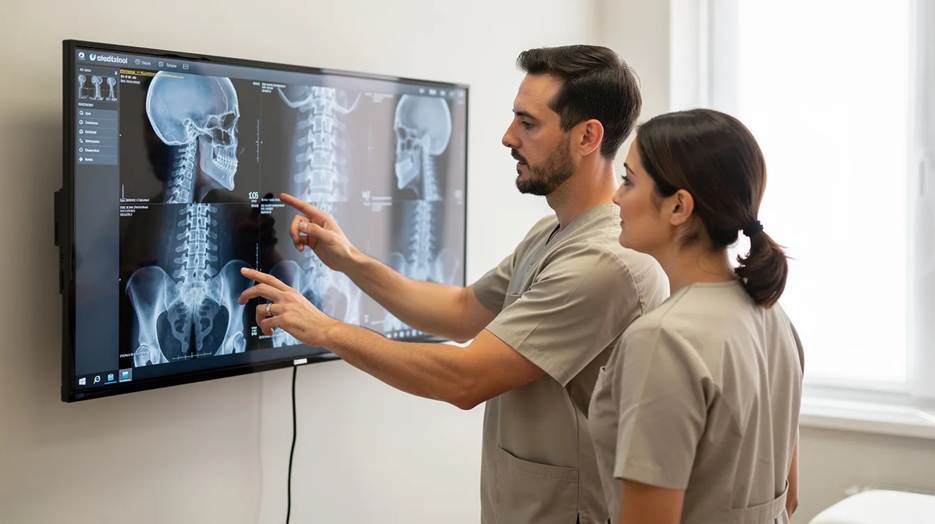
Depending on your case, imaging may be recommended. Standard X-rays show your structure at rest, but they cannot reveal how your spine behaves when you move. At Heem Health, in-motion (digital motion) X-ray captures your spine and joints in real time, helping identify instability or restricted motion that static images can miss.
Imaging is used when it will clarify the diagnosis or change the plan—not as a routine add-on for every patient.
Your Diagnosis and Treatment Plan
Once the evaluation is complete, the chiropractor explains what they found in plain language and outlines a recommended plan. A good plan is specific to your findings: it should describe what is driving your symptoms, the proposed approach, an estimated number of visits, and what improvement to expect. You should leave understanding your diagnosis—not just a schedule.
Will You Be Adjusted on the First Visit?
Sometimes yes, sometimes no. If the exam is clear and there are no red flags, many chiropractors will perform a first adjustment during the initial visit. In other cases—if imaging is pending or the picture is complex—treatment may begin at a follow-up. Either approach can be appropriate; what matters is that care is based on a clear diagnosis rather than a one-size-fits-all routine.
What a Chiropractic Adjustment Feels Like
A chiropractic adjustment is usually quick and not painful. You may hear a popping or cracking sound—this is simply gas releasing from the joint, not bones grinding. Many people feel immediate relief or looseness, while others notice gradual change over a day or two. Techniques can be adapted for your comfort and condition, including gentler, low-force methods for those who prefer them or whose situation calls for it.
After Your First Visit
It is normal to feel mild soreness or fatigue for a day after your first adjustment, similar to how you might feel after starting a new exercise. Drinking water, gentle movement, and avoiding heavy exertion right away can help. Any soreness typically settles quickly; let your provider know if it does not, or if you notice anything unexpected.
How the First Visit Differs From Follow-Ups
The first visit is the most comprehensive because it establishes your diagnosis and plan. Follow-up visits are usually shorter and focused on treatment and progress checks. This is why the initial appointment takes longer and why it lays the groundwork for everything that follows—getting it right matters more than rushing into repeated adjustments.
Conditions People Commonly Seek Help For
People come to a first chiropractic visit for many reasons—persistent lower back or neck pain, headaches, sciatica and other nerve-related symptoms, posture and mobility issues, and pain that has not resolved with rest or other care. An accurate first-visit evaluation helps determine whether chiropractic care is a good fit or whether another path is more appropriate.
How to Get the Most From Your First Visit
● Write down your symptoms and questions in advance.
● Be honest about your history, activity, and pain levels.
● Bring prior imaging or records if available.
● Ask about the diagnosis, the plan, and expected timeline.
● Wear comfortable clothing you can move in.
Starting Care at Heem Health
At Heem Health in Orange County, Dr. Joe Park emphasizes diagnostic accuracy and clear explanations, so you understand what is happening and why before any treatment begins. You can review the full range of services or book an evaluation to get started.
Frequently Asked Questions
How long does the first chiropractic visit take?
Plan for roughly 30 to 60 minutes. The first visit is longer than follow-ups because it includes the consultation, exam, any imaging, and your treatment plan.
Does a chiropractic adjustment hurt?
For most people, no. Adjustments are usually quick, and the popping sound is just gas releasing from the joint. Mild soreness afterward is normal and short-lived.
What should I wear to my first visit?
Comfortable, loose clothing you can move in. You generally will not need to change, though some clinics provide a gown for certain exams.
Will I need X-rays?
Not always. Imaging is recommended when it will clarify the diagnosis or change the plan, rather than as a routine step for every patient.
How many visits will I need?
It depends on your diagnosis and how long the issue has been present. Your provider should give an estimate and re-evaluate as you progress rather than committing you to an open-ended schedule.
This article is for general educational purposes only and is not medical advice or a substitute for an in-person evaluation. Individual experiences vary. Consult a qualified provider about your specific situation.